
A task force of the American Astronomical Society (AAS) spent a decade preparing North America for the solar eclipses of 2017, 2023, and 2024. Its activities included developing this website with basic information about eclipses, safe viewing practices, and eclipse imaging and video, along with resources for educators and the media; operating a mini-grants program to support eclipse-related education and public outreach to underrepresented groups on and off the eclipse paths; and organizing a series of multidisciplinary workshops to prepare communities for the eclipses and to facilitate collaboration between astronomers, educators, community organizers, government leaders, and tourism professionals.
For the benefit of eclipse planners worldwide, we describe the history, mission, and work of the task force on this page, which is adapted from a presentation made at the 2024 annual meeting of the Astronomical Society of the Pacific.
The AAS and Its Solar Eclipse Task Force
The American Astronomical Society (AAS), established in 1899, is a major international organization of professional astronomers, astronomy educators, and amateur astronomers. Its membership of roughly 8,000 also includes physicists, geologists, engineers, and others whose interests lie within the broad spectrum of subjects comprising the astronomical sciences. The mission of the AAS is to enhance and share humanity’s scientific understanding of the universe as a diverse and inclusive astronomical community, which it achieves through publishing, meetings, science advocacy, education and outreach, and training and professional development.
The AAS accomplishes much of its work through standing committees, long-term working groups, and short-term task forces, all of whose members are volunteers. The initial step toward what became the AAS Solar Eclipse Task Force was taken in 2012, five years before the August 2017 U.S. total solar eclipse, the first to cross the country in a century. Shadia Habbal, a solar physicist and eclipse chaser, organized a workshop in Washington, DC, at which eclipse-interested amateur and professional astronomers began to consider how best to prepare North America for the coming eclipse.
The AAS Council (later renamed the Board of Trustees) took up the issue in 2014, spurred principally by Kevin B. Marvel, the AAS Executive Officer, and AAS Councilor Angela Speck. Marvel was especially keen to ensure the widespread dissemination of appropriate safety messaging; he wanted to avoid a situation he’d seen in some other countries where solar eclipses had occurred and where authorities recommended that citizens should stay indoors and not look at any phase of the eclipse, not even totality. Speck, then at the University of Missouri in Columbia — within the 2017 path of totality — was already working on local eclipse planning and recognized that the nationwide event was too big for astronomers to tackle alone; she recommended a partnership with other relevant stakeholders, for example, in education and public engagement, the tourism and hospitality industries, state and local government, transportation and emergency management, law enforcement, health care, and the media.
Task Force Charge and Leadership
The Council agreed with Marvel and Speck that the AAS should play a major role in preparing the country for the 2017 eclipse (and the subsequent American eclipses of 2023 and 2024) and created the Solar Eclipse Task Force with Habbal and Speck as its co-chairs. The task force was charged principally with the following responsibilities: (1) Coordinating state, local, and national efforts by bringing eclipse planners together, helping them to work together effectively and minimize redundancy; (2) Facilitating frequent and effective communication and idea sharing among all stakeholders; (3) Providing clear, evidence-based information and guidance on solar-eclipse eye safety; (4) Encouraging and supporting the debunking and quashing of bad/unreliable (mis)information; and (5) Encouraging as many people as possible to experience the eclipses, inside the path of totality (2017, 2024) or annularity (2023) if possible, but in any case safely, enjoyably, and meaningfully.
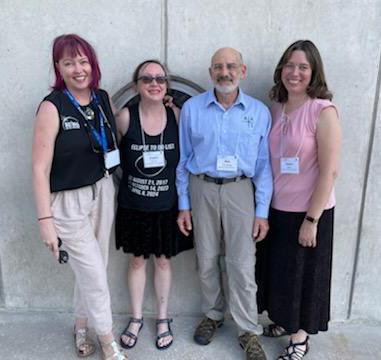
Together Habbal and Speck recruited a multidisciplinary group of about two dozen task-force members with a wide variety of relevant experience and expertise. While Speck remained co-chair throughout the subsequent decade, Habbal left the task force after the 2017 eclipse and was succeeded by Claire Raftery, then the National Solar Observatory’s education and outreach coordinator. Raftery left NSO and the task force in 2022 and was succeeded by Debra Ross, the lead eclipse planner in Rochester, New York, and an accomplished networker and motivator of volunteers. Each co-chair has brought unique strengths to the role. The task force also had incredible support from Rick Fienberg, first as an AAS staffer and later, after his retirement in 2021, as a volunteer; an experienced eclipse-chaser and project manager, he was indispensable in keeping the AAS eclipse-planning effort running smoothly.
Our Community
Our community included professional and amateur astronomers, formal and informal educators, community leaders, emergency managers, transportation coordinators, healthcare professionals, and media representatives. Tourism and hospitality were also key players because eclipses bring a significant economic boost to regions in the path of annularity or totality.
Having participants with expertise in a wide variety of fields was crucial. For example, federal and state transportation officials provided invaluable insights into transportation logistics for large events.
Solar Eclipse Task Force Key Projects
We undertook three main projects to accomplish the goals set out in our charge: (1) a series of eclipse-planning workshops, (2) a program of mini-grants to support eclipse education and outreach, and (3) this website, designed to serve as a gateway to all the best eclipse information and resources, both online and “in real life.” Over time our online presence became more robust than just the main website. We also managed social media channels on Facebook, Instagram, and YouTube with important announcements and a collection of videos from our workshops, preserving valuable content for future eclipse planners.
You're exploring the website right now. For details on the workshops and mini-grants, click on Workshops and Mini-Grants, respectively, on this site's main menu.
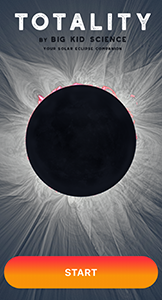 Of course, to carry out our key projects and other activities, we required funding. In addition to a grant from the AAS Council (later the Board of Trustees), we received significant support from NASA, which especially helped with travel and logistics for the workshops. NSF funded our web development and mini-grant programs, and the American Institute of Physics (AIP) supported several outreach training sessions for students, teachers, and amateur astronomers held in conjunction with our eclipse workshops. AIP also provided funding to upgrade the Totality by Big Kid Science mobile app, which was donated to the AAS by its creator after the 2017 eclipse.
Quite a few task-force members ran their own major projects with funding from various sources including, and many participants in our workshops joined our working groups, which advanced the task force’s efforts and increased its reach to large numbers of communities in the U.S., Canada, and Mexico.
Lessons Learned — Part I
Throughout our decade of eclipse planning, we learned some valuable lessons. First and foremost, this kind of work is hard — it takes time, patience, and careful coordination among individuals and groups from diverse backgrounds and disciplines.
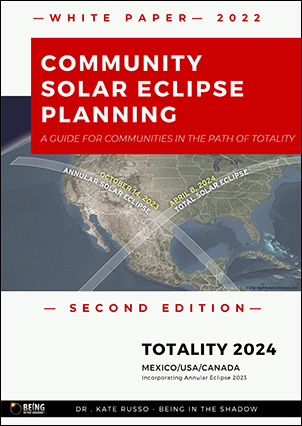 Starting early is essential, but it’s also challenging because many people don’t see the urgency until the event is just months or even weeks away. But if you fail to plan, you essentially plan to fail. One of the great tools we made available very early came from Kate Russo (BeingInTheShadow.com), a task-force member, eclipse chaser, and professional clinical psychologist. She wrote Community Solar Eclipse Planning: A Guide for Communities in the Path of Totality. Her 2017 and 2024 editions were available from eclipse.aas.org more than a year before their respective eclipses, and countless state and local task forces used them as their “bible” for preparing for these events. It’s largely thanks to her that many communities over the years and across the continent had huge success on eclipse day.
Volunteers were critical to our success, but relying on unpaid labor has its limits. People’s time and availability can be unpredictable, especially when they’re juggling other responsibilities.
Consistent messaging was critical too. For example, virtually all departments of transportation across the U.S. put out the same message: arrive at your eclipse-viewing site early, stay put no matter what the weather, and don’t leave as soon as annularity or totality ends. Well, two out of three ain’t bad! There were no traffic jams before the 2017 eclipse and no problems during it, but as soon as the Moon began to move off the Sun, highways became clogged. Some travelers took 10 times longer to get home than they did getting from home to their observing site. Having learned from that experience, many communities were careful to add enticing post-eclipse programming to their 2023 and 2024 events. But somehow that didn’t prevent monumental traffic jams from occurring again after those eclipses. We’re not sure how the messaging could have been more persuasive or more pervasive, so that’s going to be a challenge for future solar eclipses in heavily populated places.
Combating misinformation requires constant effort and vigilance, something beyond any individual’s or group’s capacity given how fast and far “alternative facts” are able to spread in our current media environment. Even with clear safety guidelines and endorsements from trusted organizations, myths and misconceptions were rampant. The worst of them — that there’s no safe way to look at a solar eclipse — unfortunately caused some people to skip (or, in the case of students, to be forced to skip) the 2017, 2023, and/or 2024 events and the learning opportunities that these celestial spectacles offered.
There is no easy fix to the problem of misinformation, but there is a hard one: teaching everyone how to recognize their unconscious biases, think critically, and ask penetrating questions so that they can identify lies and avoid being misled.
Lessons from Our Grantees
We also gathered valuable feedback from the recipients of our mini-grants, who offered the following advice: (1) Collaborate with other organizations and programs to maximize your impact; (2) Don’t reinvent the wheel, but instead use tried-and-tested methods when possible; (3) Advertise extensively and make sure your message reaches diverse audiences, including non-English speakers; (4) Weather, logistics, and attendance can be unpredictable, so expect the unexpected and make sure you have contingency plans; and (5) Think through all the small details, like parking, exterior lighting (we don’t want it to come on during totality!), and restroom facilities. These practical considerations can make or break an event.
Lessons Learned — Part II
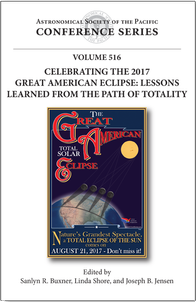 The Astronomical Society of the Pacific (ASP) has published the proceedings of two conferences featuring post-mortems on the "Great American" solar eclipses. Many of the articles were written by members of the AAS Solar Eclipse Task Force or its working groups, attendees at our workshops, and recipients of our mini-grants. Most focus on lessons learned from organizing and executing events and activities in connection with the eclipses. The ASP proceedings are behind a paywall, but we're making a few key articles from the task force available here as free PDFs.
- "Celebrating the 2017 Great American Eclipse: Lessons Learned from the Path of Totality," edited by S. Buxner, L. Shore, and J. Jensen, ASP Conference Series, Vol. 516, 2019.
- "What the American Astronomical Society Learned from the 'Great American Eclipse'" by R. T. Fienberg (2.3 MB PDF)
- "Audience Responses to Viewing the August 21, 2017, Solar Eclipse" by J. Noel-Storr (113 KB PDF)
- "ASP 2024: Astronomy Across the Spectrum," edited by G. Schultz, S. Buxner, J. Jensen, and J. Barnes, ASP Conference Series, Vol. 539, 2025.
- "Lessons for the 2040s from the AAS Solar Eclipse Task Force" by A. Speck, D. E. Ross, and R. T. Fienberg (528 KB PDF)
 Additionally, the Bulletin of the American Astronomical Society (BAAS) is publishing a series called "Celebrating the Wonder of Science in the Shadow." It features articles from a wide variety of people who experienced one or more of the recent American solar eclipses, whether through community engagement, education, or scientific observation. As with the ASP volumes, numerous members of the AAS Solar Eclipse Task Force or its working groups, attendees at our workshops, and recipients of our mini-grants are among the authors. The BAAS is a free, open-access online journal, and the articles in this series capture additional lessons learned in preparing for the "Great American" solar eclipses. Here are links to the three BAAS special issues, all edited by S. Buxner and P. L. Gay:
- Celebrating the Wonder of Science in the Shadow I
- Celebrating the Wonder of Science in the Shadow II
- Celebrating the Wonder of Science in the Shadow III
A Legacy for the Future
The AAS Solar Eclipse Task Force intends to leave a legacy for the future. This legacy will serve two purposes: preserving knowledge for future eclipse events, and helping communities reflect on, and benefit from, what we’ve accomplished. Capturing the tangible results of our decade of work will ensure that the lessons we’ve learned can guide others for many years to come.
Building a Network of Relationships
One of our key successes was creating a strong network of collaborators. In Rochester, New York, for example, the local task force, led by Debra Ross, started organizing right after the 2017 eclipse. Over the years, they built relationships across a wide range of sectors, from local governments to tourism boards and emergency services.
They measured the growth of these relationships quantitatively. Before the task force started, the relationships among the members numbered about 220 active connections. After years of organizing, that number grew by 63%, with many new partnerships forming between people who might never have connected otherwise.
The strength of these relationships extends beyond the eclipse. Many of these networks will remain active, supporting future community initiatives. This kind of social capital is one of the most lasting impacts of our work.
Documenting the Journey
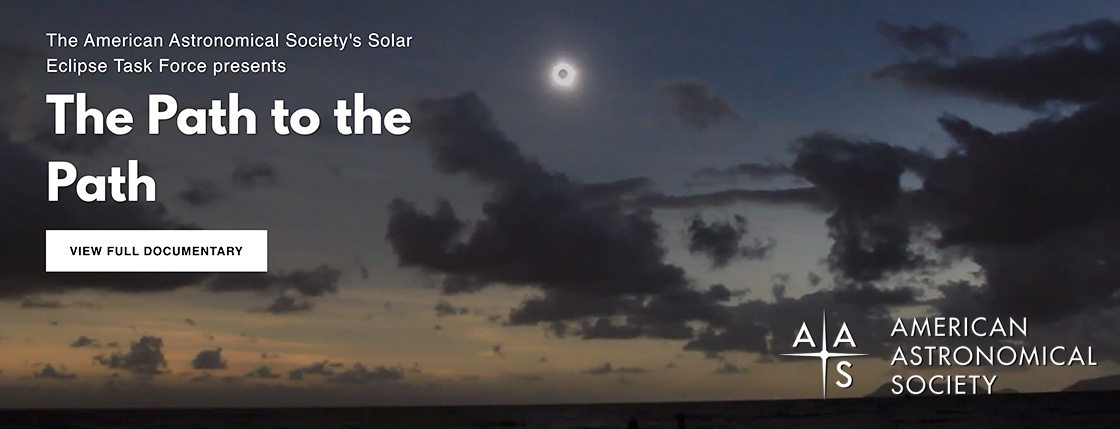
To memorialize our experience, we created a documentary called The Path to the Path. It features interviews with task-force members, community leaders, and other stakeholders, offering an inside look at how we pulled everything together. You can watch the 25-minute film at ThePathToThePath.org. It’s an inspiring story of collaboration and dedication.
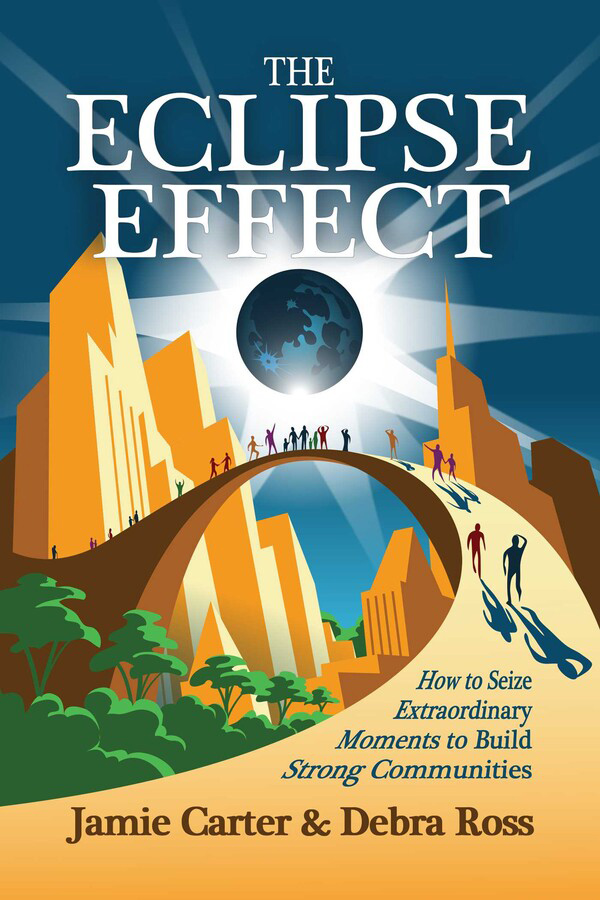 Eclipse-chasing science journalist Jamie Carter and AAS Solar Eclipse Task Force co-chair Debra Ross have written a book entitled The Eclipse Effect: How to Seize Extraordinary Moments to Build Strong Communities (Post Hill Press, 2025). It offers a framework for turning any catalyst — a natural event (such as a total solar ecilpse), milestone, or unique opportunity — into a lasting legacy. It is applicable to regions large and small, to businesses, to schools, to nonprofit boards, and even to families. By emphasizing vision, collaboration, and strategic action, it provides a roadmap for uniting diverse talents and communities to maximize potential and create meaningful, long-term impact in virtually any context.
Archiving Resources
We’re also ensuring that all the information we’ve gathered and produced remains accessible via this website, which includes essential information about solar eclipses, workshop recordings, videos, and other materials that will be of value to future eclipse planners.
Acknowledgments
Working on the AAS Solar Eclipse Task Force has been one of the most rewarding experiences of our lives. The dedication, intelligence, and creativity of everyone involved have been truly inspiring. If you ever have the chance to work on something like this, we highly encourage you to do so. It is challenging, but the impact is immeasurable!
Co-chairs Angela Speck and Debra Ross and project manager Rick Fienberg thank the hundreds of people who served on the AAS Solar Eclipse Task Force and its working groups, attended our workshops, or otherwise engaged with us in preparing North America for the 2017, 2023, and 2024 solar eclipses. Our 2017 and 2024 mini-grant programs were funded by the U.S. National Science Foundation, grant numbers 1564535 and 2318745, respectively. We are also grateful to the AAS, NASA, and the American Institute of Physics (AIP) for additional financial support.