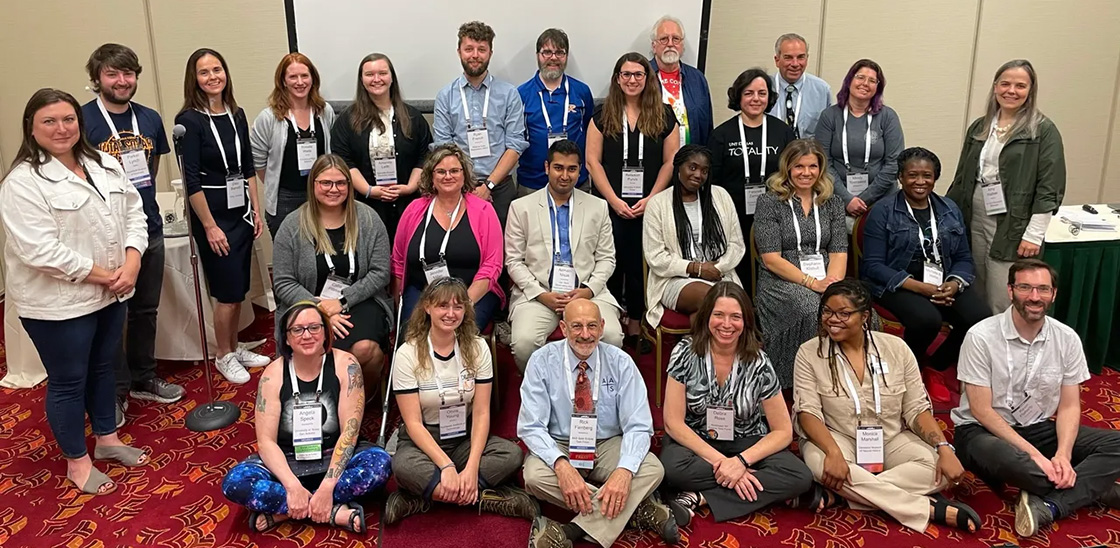
The AAS Solar Eclipse Task Force's mini-grants programs, funded by the U.S. National Science Foundation (NSF), empowered communities across the United States to create innovative and transformative learning programs, scientific activities, and outreach events to engage the public with the "Great American" total solar eclipses of August 2017 and April 2024. In awarding grants, we gave priority to projects specifically designed to engage members of under-represented groups (including women and girls, ethnic minorities, and people with physical and/or mental disabilities) who often don’t imagine themselves in science careers or who believe that science is “not for them.”
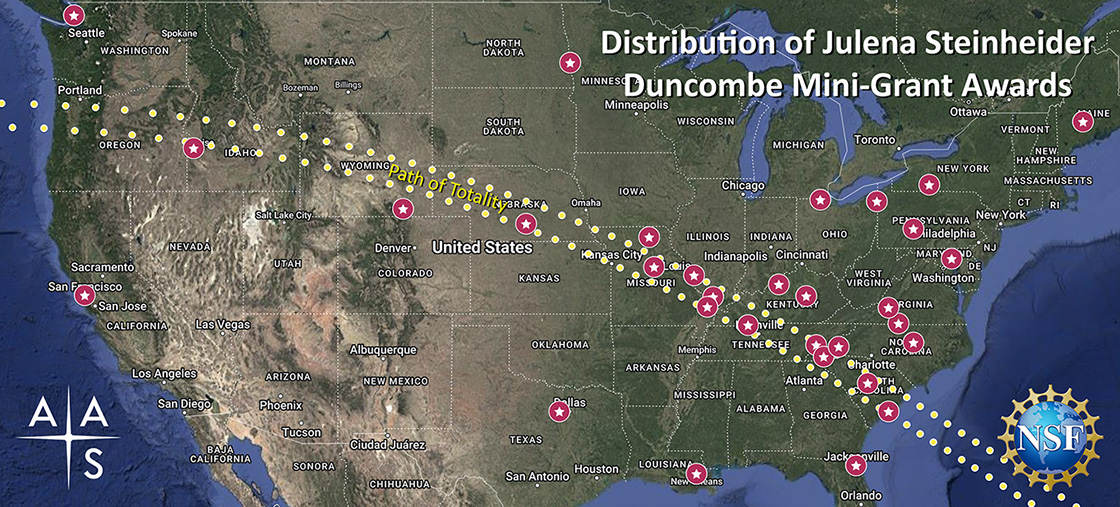
We named our 2017 mini-grants program for Julena Steinheider Duncombe (1911– 2003), an outstanding astronomer and educator who started the U.S.’s first school-lunch program for underprivileged children. For many years she published eclipse predictions for the U.S. Naval Observatory. We distributed about $100,000 across 31 projects, reaching nearly 30,000 people in 21 states. These projects ranged from hands-on educational activities to community outreach events, and they had a significant impact. Our post-eclipse evaluation found that members of the public attended events with no particular interest in learning anything — they just wanted to have fun and see the eclipse — but many left wanting to learn more about eclipses.
We expanded the mini-grants program for the 2024 eclipse and named it This program, f is named for the Jay M. Pasachoff (1943–2022), a charter member of the AAS Solar Eclipse Task Force. After completing his education at Harvard University and Caltech, Jay spent the next 50 years as a professor of astronomy at Williams College in Massachusetts. Among his primary research interests were the heating and dynamics of the Sun's corona, which he studied at solar eclipses all across the planet. For 2024 we awarded about $200,000 via 25 small grants and 8 larger ones. This time, we focused even more on underserved communities, including people with visual or auditory impairments. Many people think a solar eclipse is irrelevant to those who can’t see or hear, but our grantees found creative ways to engage everyone. Even people without disabilities found value in the tactile resources and descriptive narrations developed by some of the projects we funded. Other projects included such things as bilingual educational materials, solar telescopes, and portable planetariums. Public events, another major focus of our awards, included everything from local pre-eclipse workshops to large-scale viewing events on eclipse day itself. Some projects even incorporated science experiments and live demonstrations.
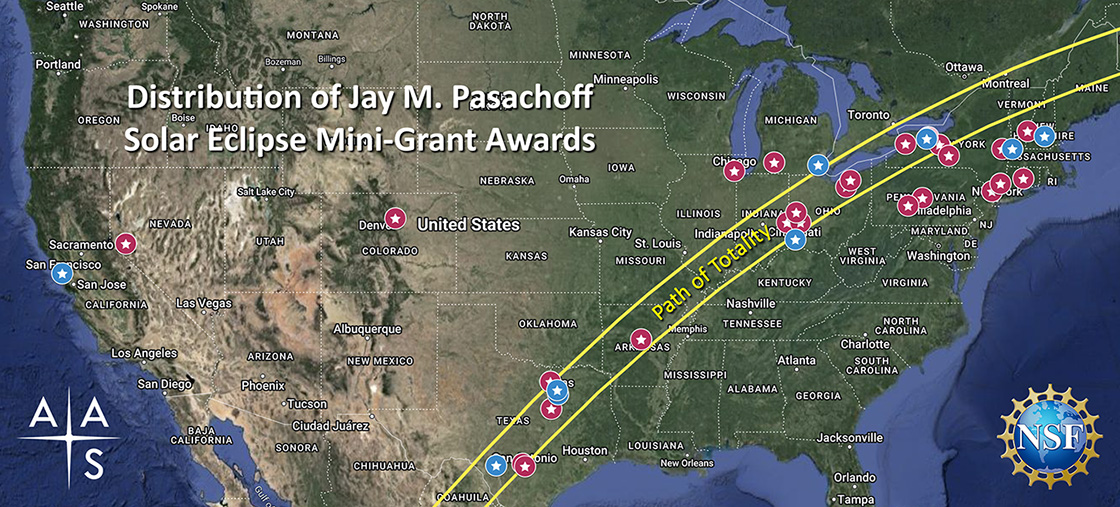
The 33 teams we funded in 2024 engaged hundreds of educators and outreach practitioners, reached more than 40,000 students, and attracted hundreds of thousands of attendees to public events. This level of impact was possible only because of the money we distributed through the mini-grants. Our grantees’ creativity and dedication turned these funds into transformative experiences for their communities and undoubtedly inspired a new generation of scientists and science educators.